
Call us now :08071780022
 Send Inquiry
 Send Inquiry
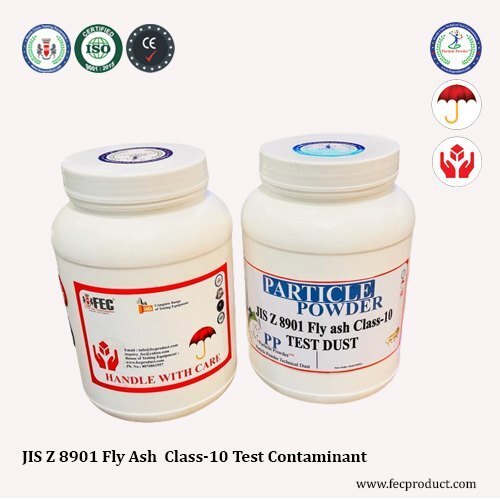
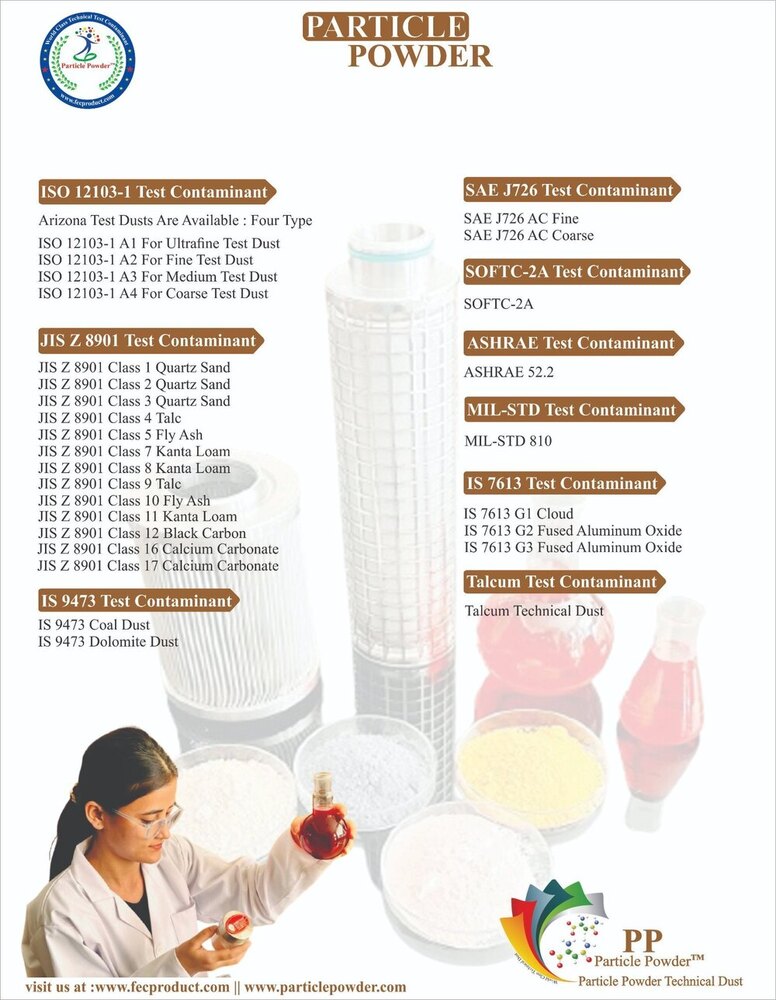
JIS Z 8901 Class 10 Fly Ash
Price 14000.0 INR/ Kilograms
MOQ : 1 Kilograms
JIS Z 8901 Class 10 Fly Ash Specification
- Purity
- High â Suitable for industrial testing
- Shelf Life
- Stable under dry, sealed storage conditions
- Grade
- Laboratory
- Type
- Industrial Lab Chemicals
- Appearance
- Powder
- Purity(%)
- 99%
JIS Z 8901 Class 10 Fly Ash Trade Information
- Minimum Order Quantity
- 1 Kilograms
- Sample Available
- Yes
- Main Export Market(s)
- Asia, Australia, Central America, North America, South America, Eastern Europe, Western Europe, Middle East, Africa
- Main Domestic Market
- All India
JIS Z 8901 Class 10 Fly Ash About
Test Powder Class 4 and Class 9 The quality of test powders class 4 and class 9 (Talc) shall conform to the following items.Particle Density : Particle density shall be the value of 2.7 g/cm3 to 2.9 g/cm3 when measured according to the method in test.
FAQs
Q: What are Japanese Industrial Standard test powders used for?
A: They are used in dust separation tests, air filter function tests, wear tests, and other industrial evaluations.
Q: What is the specified particle density for Class 4 and Class 9 test powders?
A: The particle density must be within the range of 2.7 g/cm to 2.9 g/cm, measured according to the designated method.
Q: Can these test powders be used for calibrating automatic particle counters?
A: Yes, these test particles are suitable for calibrating light-scattering automatic particle counters and evaluating high-performance air filters.
Q: What standards do Class 4 and Class 9 powders conform to?
A: They conform to Japanese Industrial Standards, ensuring accuracy and reliability for various testing applications.
Q: Are there specific industries where these powders are essential?
A: Yes, they are widely used in industries such as air filtration, automotive testing, environmental monitoring, and laboratory research.
Exceptional Purity and Stability
Our JIS Z 8901 Class 10 Fly Ash boasts a 99% purity level, ensuring dependable and repeatable results in laboratory and industrial settings. The powder's stability under proper storage conditions guarantees longevity and consistent quality, making it a sound investment for any research or testing environment.
Trusted Supply Chain from India
Manufactured and supplied by reputable exporters in India, this laboratory-grade fly ash meets stringent industrial requirements. Our comprehensive distribution network ensures prompt delivery and reliable service for customers globally, supporting a range of specialized projects.
FAQ's of JIS Z 8901 Class 10 Fly Ash:
Q: How should JIS Z 8901 Class 10 Fly Ash be stored to preserve its shelf life?
A: The product should be kept in dry, sealed storage conditions to maintain its stability and extend shelf life. Avoiding exposure to moisture and contaminants helps preserve its high purity and powdered form.Q: What makes this fly ash suitable for industrial and laboratory testing?
A: Its high purity (99%) and precise powder grade make it ideal for applications requiring accurate, reproducible results. The material's consistency meets the demanding standards of both industrial and laboratory environments.Q: When is it best to use JIS Z 8901 Class 10 Fly Ash in testing?
A: This product is best utilized whenever high-purity, laboratory-grade material is necessary for experiments, quality control, or analytical testing. Its reliable composition ensures effective performance in diverse testing timelines.Q: Where is JIS Z 8901 Class 10 Fly Ash typically sourced from?
A: It is produced by established manufacturers and exporters based in India, ensuring a consistent quality supply with global distribution capabilities.Q: What is the process for utilizing this fly ash in laboratory applications?
A: The fly ash can be carefully measured and incorporated into analytical procedures, mixing protocols, or testing equipment as required by the methodology. Its fine powder allows for precise dosing and homogeneous mixing.Q: What are the main benefits of using this laboratory-grade fly ash?
A: The primary advantages include its reliable high purity, stable shelf life, and consistent performance, all of which are essential for achieving dependable results in industrial and laboratory studies.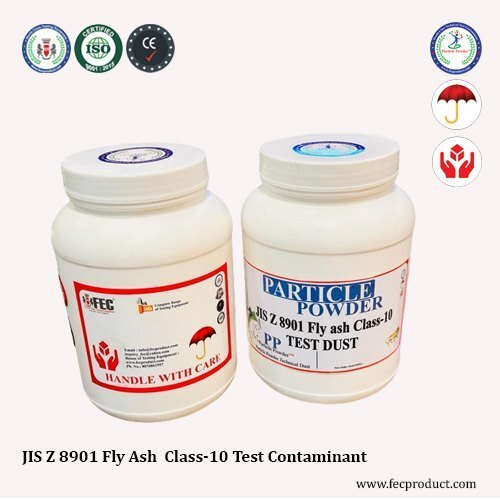
Tell us about your requirement

Price:
Quantity
Select Unit
- 50
- 100
- 200
- 250
- 500
- 1000+
Additional detail
Mobile number
Email

More Products in Technical Contaminant Particle Powder Category
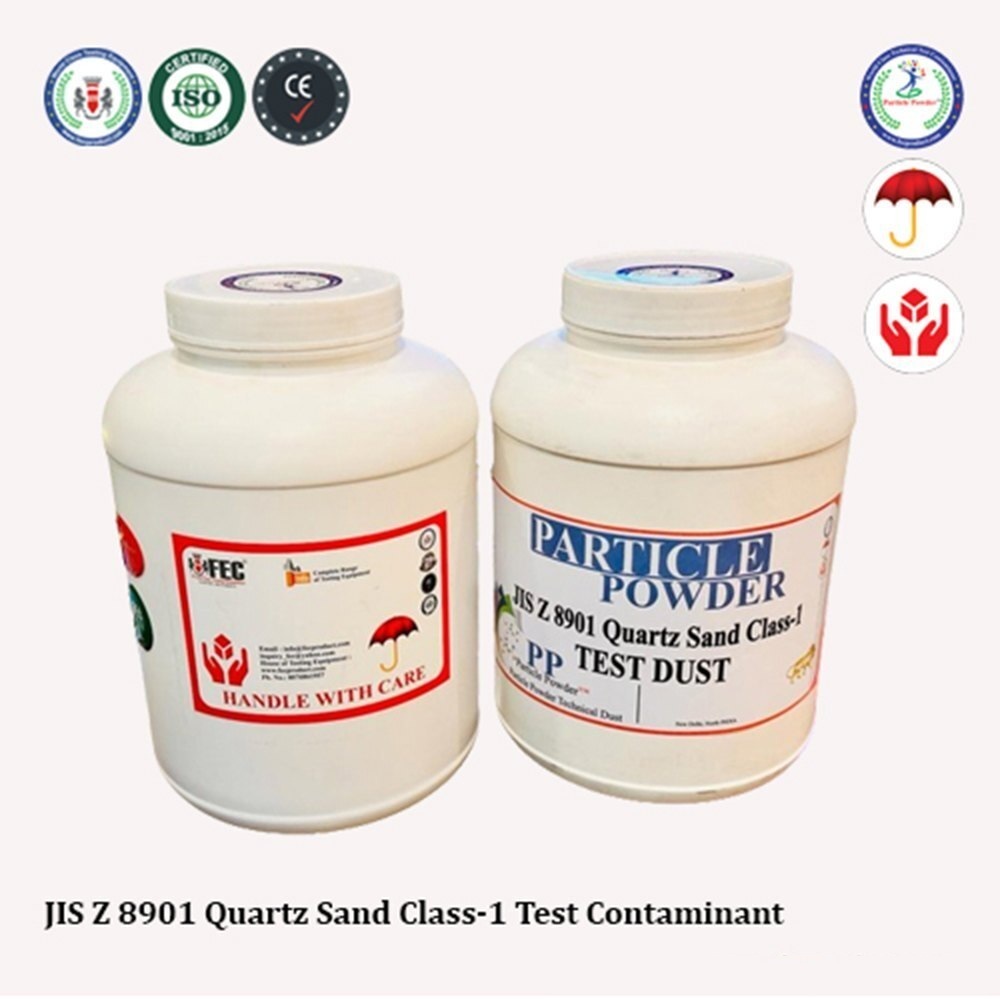
JIS Z 8901 Class 1 Quartz Sand
Price 14000.0 INR / Unit
Minimum Order Quantity : 10 Kilograms
Grade : Laboratory
Appearance : Powder
Type : Industrial Lab Chemicals
Shelf Life : 5 years if unopened
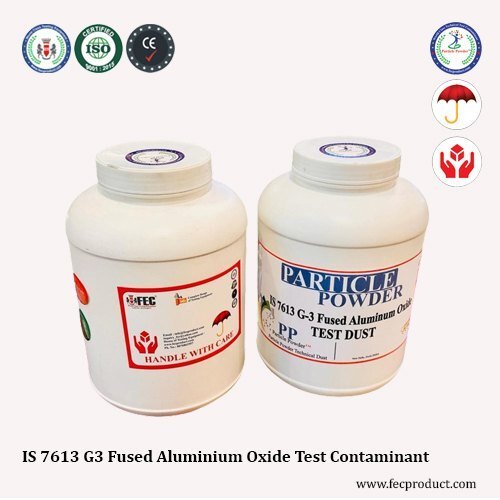
IS 7613 G3 Fused Aluminum
Price 14000.0 INR / Unit
Minimum Order Quantity : 10 Units
Grade : Laboratory
Appearance : Powder
Type : Industrial Lab Chemicals
Shelf Life : 5 years
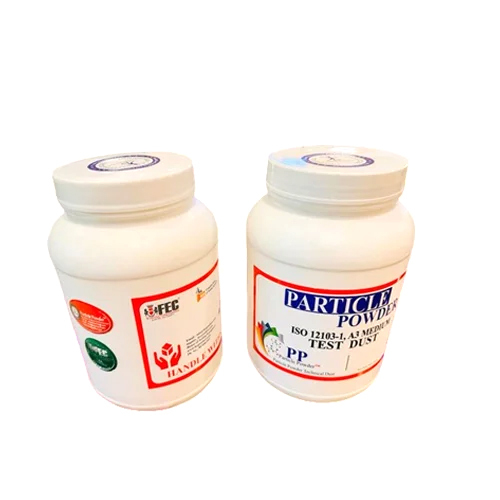
ISO 12103-1 A3 Medium Test Contaminant Powder
Price 14000.0 INR / Unit
Minimum Order Quantity : 1 Unit
Grade : Laboratory
Appearance : Powder
Type : Industrial Lab Chemicals
Shelf Life : Stable under dry, sealed storage conditions
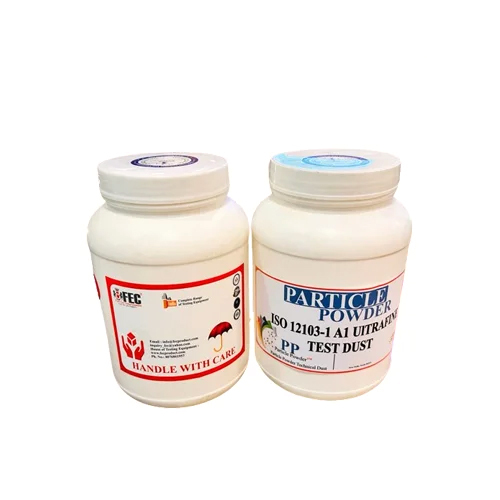
A1 Ultrafine Test Contaminant Powder
Price 12000.0 INR / Kilograms
Minimum Order Quantity : 1 Kilograms
Grade : ISO 121031 A1 Ultrafine
Appearance : Ultrafine Particle Powder
Type : Other, Test Contaminant Powder

 Send Inquiry
Our Products
- Technical Contaminant Particle Powder
- Deep Freezer
- Sample Gsm Cutter
- Particle Powder Technical Contaminant
- Air Filter and Cabin Test Equipment
- HVAC Air Filter Test Equipment
- Oil Filter Test Equipment
- Fuel Filter Test Equipment
- RO and Water Filter Test Equipment
- Filtration Media Test Equipment
- Face Mask Test Equipment
- Automobile Paint And Plating Equipment
- Environmental Chambers
- Paper Packaging Test Equipment
- Footwear And Rubber Test Equipment
- Radiator And Puff Panel Test Equipment
- Humidity Chamber
- Smoke Density Tester
- Analytical Balance

Plot No-35, K-1 Extn., Bank Wali Gali Gurudwara Road, Mohan Garden, Uttam Nagar,New Delhi - 110059, India

Mr T.P. P. Saxena
(Proprietor)
Mobile :08071780022
 Send Inquiry
Developed and Managed by Infocom Network Private Limited.
