
Call us now :08071780022
 Send Inquiry
 Send Inquiry
radiator-impulse-testing-equipment (826x826)
Price 1000.0 INR/ Ton
MOQ : 1 Ton
radiator-impulse-testing-equipment (826x826) Specification
- Operating Voltage
- 380V AC
- Frequency
- 1 Hz - 2 Hz
- Application
- Impulse fatigue testing for radiator/heat exchanger automotive components
- Specimen Size
- Customizable (radiator sizes)
- Mounting Type
- Floor-mounted
- Features
- High-precision, safety enclosed, automated cycle control
- Interface Type
- Ethernet/USB (optional)
- Measuring Range
- 0 - 10 MPa
- Power Supply
- AC 380V, 50Hz
- Display Type
- Digital touch screen
- Test Range
- 0 - 20000 cycles
- Automation Grade
- Automatic
- Response Time
- <1s
- Temperature
- 5C - 60C
- Gas Pressure
- 0 - 10 bar
- Number of Specimens
- 1 (standard)
- Equipment Type
- Radiator Impulse Testing Equipment
- Hardness
- Industrial grade, stainless steel structure
- Max Height
- 1200 mm
- Humidity
- 30% - 85% RH
- Port Size
- DN32/DN40 (Customizable)
- Resolution
- 0.01 MPa
- Accuracy
- 1% FS
- Usage
- Automotive radiator impulse/fatigue durability
- Capacity
- Single-unit test chamber
- Machine Weight
- Approx. 1100 kg
- Test Speed
- Variable, up to 30 cycles/min
- Test Width
- Up to 825 mm
- Test Stroke
- 0 - 80 mm (Adjustable)
- Control Mode
- PLC/Computer-controlled
- Installation Service
- Available on request
- Lighting
- LED internal chamber lighting
- Cooling System
- Optional water/air cooled
- Safety Protection
- Automatic overpressure, overtemperature, emergency stop
- Color
- Industrial Silver/Gray
- Dimension (L x W x H)
- Approx. 1700 mm x 900 mm x 1500 mm
- Test Fluid
- Water, Glycol, Oil mix (customizable)
- Noise Level
- < 72 dB(A)
- Cycle Memory
- Digital, pre-settable and auto-recorded
- Data Storage
- Integrated memory, USB export
- After Sales Support
- Remote diagnostics, software updates
- Ambient Operation Temperature
- 0C - 45C
- Chamber Material
- Stainless steel, anti-corrosion coated steel
radiator-impulse-testing-equipment (826x826) About
This test methods describe laboratory testing of Radiator to prove their mechanical integrity. Radiator are tested to determine the pressure Impulse of the housing materials and construction. This test simulate conditions of engine lubrication system cyclic pressure pulsation. The test condition value should correspond with those actually measured on the intended engine applicable when such information is available.Advanced Durability Testing Technology
Engineered for precise and reliable impulse fatigue testing, this equipment offers automated control modes, variable test speeds of up to 30 cycles per minute, and accurate digital data capture. Customizable parameters allow testing on a broad range of radiator sizes, ensuring versatile use for automotive applications. Built-in LED lighting and digital interface enable clear visual monitoring and user-friendly operation.
Robust Safety and Smart Features
The system incorporates powerful safety features such as automatic overpressure and overtemperature protection, supplemented by an emergency stop. Cycle memory and automatic recording functions support continuous, error-free testing. Industrial-grade construction with anti-corrosion coated steel ensures longevity and performance, while quiet operation (<72 dB(A)) makes it suitable for factory or lab environments.
Comprehensive Support and Connectivity
Integrated remote diagnostics and software updates ensure trouble-free operation post-installation, with support available for initial setup on request. Data can be exported via USB or Ethernet, enabling convenient test result management. The equipment is compatible with water, glycol, or oil mixtures, and can be customized for specific test requirements, making it a valuable tool in automotive quality assurance.
FAQ's of radiator-impulse-testing-equipment (826x826):
Q: How does the radiator impulse testing equipment operate?
A: The system is PLC or computer-controlled, automating the entire test sequence. You can pre-set the number of cycles, test speed, and stroke, while the machine digitally records and stores test data. Real-time monitoring is possible through its digital touchscreen display, and test parameters are adjustable for a variety of radiator sizes.Q: What protection and safety features are included?
A: Safety is ensured by automatic overpressure and overtemperature systems, as well as an emergency stop. The chamber is constructed from stainless steel and anti-corrosion coated steel, providing durability and resistance to harsh test fluids. These safeguards minimize risks during continuous or high-cycle testing.Q: When can installation and after-sales support be requested?
A: Installation service is available upon request with each unit purchase. After-sales support-such as remote diagnostics and software updates-is included, ensuring smooth operation and timely troubleshooting should any issues arise during use.Q: Where is the data from testing stored and how can it be exported?
A: The equipment features integrated memory for test data and supports USB export for convenient data retrieval. Ethernet exporting is also an optional feature, allowing easy integration with laboratory information management systems or company networks.Q: What types of test fluids and radiators are supported?
A: The chamber can handle water, glycol, or oil mix as test fluids, supporting a range of conditions for simulating real-world radiator use. Radiator sizes are customizable up to a test width of 825 mm, making this equipment adaptable for different automotive applications.Q: How does the testing process benefit automotive manufacturers?
A: This equipment enables rigorous impulse fatigue testing by simulating harsh operating conditions, identifying potential points of failure before products enter the market. Automated cycle control, accurate measurements, and customizable test parameters help manufacturers ensure radiator durability and compliance with industry standards.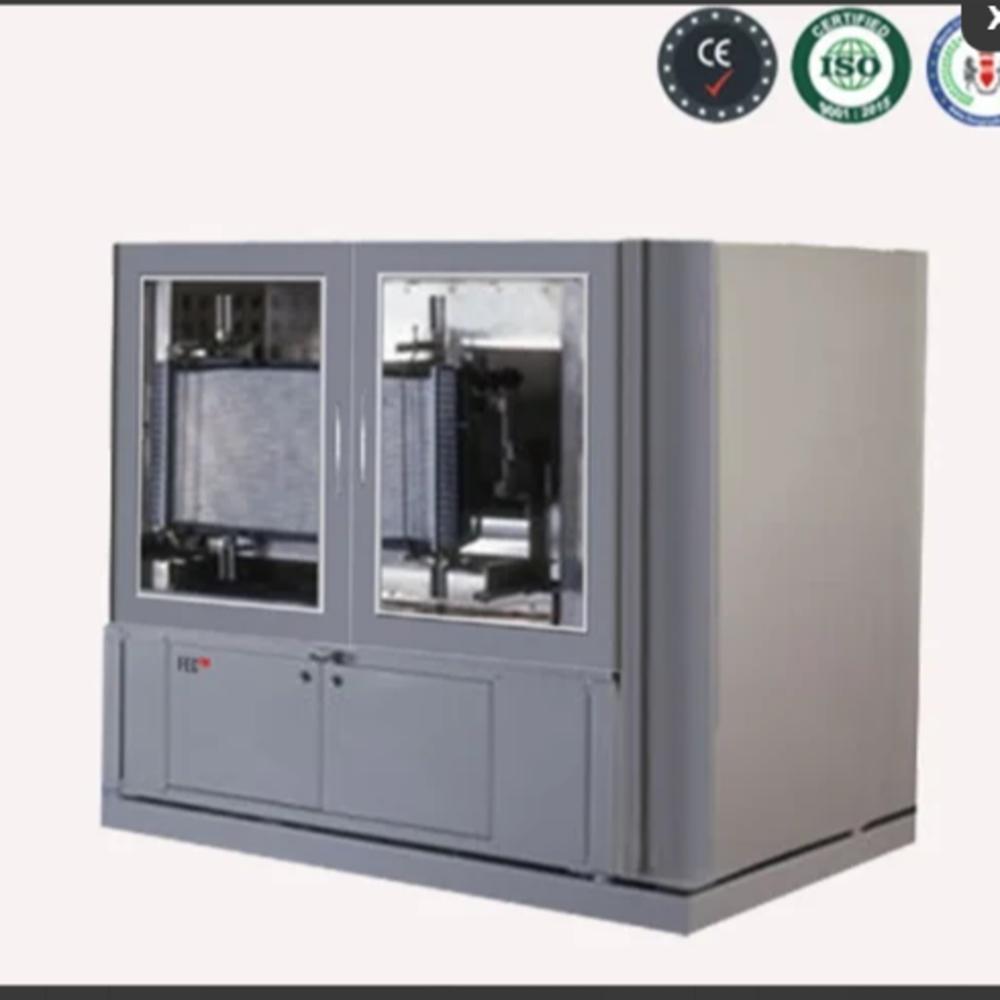
Tell us about your requirement

Price:
Quantity
Select Unit
- 50
- 100
- 200
- 250
- 500
- 1000+
Additional detail
Mobile number
Email

More Products in Oil Filter Test Equipment Category

ISO 4548 5 Filter Impulse Test Rig
Price 10000.0 INR / Piece
Minimum Order Quantity : 1 Piece
Usage : Laboratory
Material : Stainless Steel
Color : Silver
Power Supply : Electric
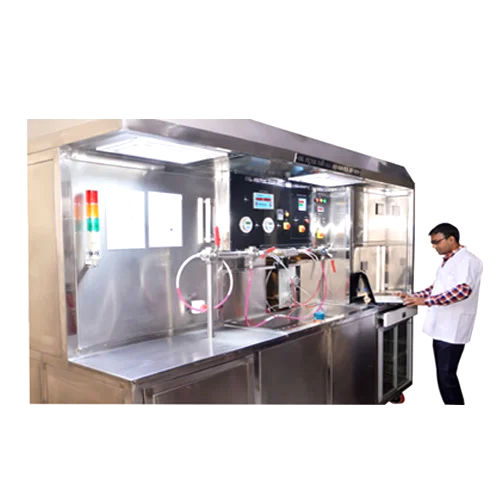
ISO 4548 12 ISO 16889 Multi Pass Oil Filter Test Rig Equipment
Price 10000.0 INR / Unit
Minimum Order Quantity : 1 Unit
Usage : Industrial
Material : Metal
Color : Silver
Power Supply : Electric
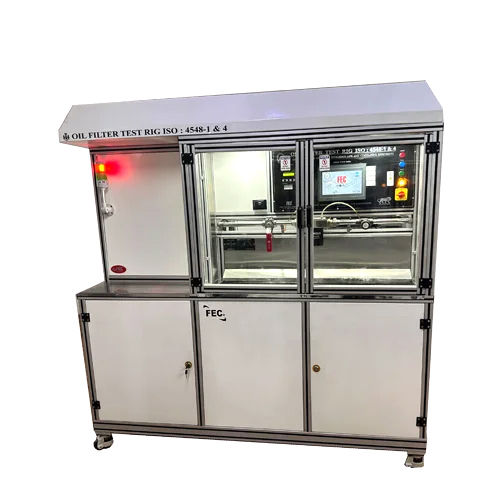
ISO 4548 4 Oil Filter Test Rig Equipment
Price 10000.0 INR / Unit
Minimum Order Quantity : 1 Piece
Usage : Industrial
Material : Metal
Color : Silver
Power Supply : Electric

Oil Filter Flat Sheet Media Test Rig Equipment
Price 10000.0 INR / Unit
Minimum Order Quantity : 1 Unit
Usage : Industrial
Material : Metal
Color : Silver
Power Supply : Electric

 Send Inquiry
Our Products
- Technical Contaminant Particle Powder
- Deep Freezer
- Sample Gsm Cutter
- Particle Powder Technical Contaminant
- Air Filter and Cabin Test Equipment
- HVAC Air Filter Test Equipment
- Oil Filter Test Equipment
- Fuel Filter Test Equipment
- RO and Water Filter Test Equipment
- Filtration Media Test Equipment
- Face Mask Test Equipment
- Automobile Paint And Plating Equipment
- Environmental Chambers
- Paper Packaging Test Equipment
- Footwear And Rubber Test Equipment
- Radiator And Puff Panel Test Equipment
- Humidity Chamber
- Smoke Density Tester
- Analytical Balance

Plot No-35, K-1 Extn., Bank Wali Gali Gurudwara Road, Mohan Garden, Uttam Nagar,New Delhi - 110059, India

Mr T.P. P. Saxena
(Proprietor)
Mobile :08071780022
 Send Inquiry
Developed and Managed by Infocom Network Private Limited.
